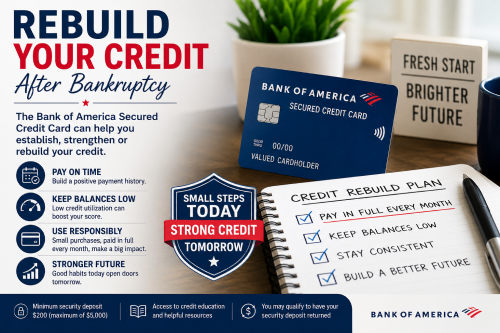
Bank of America Secured Credit Card After Bankruptcy: A Practical Tool for Rebuilding Your Credit
Filing for bankruptcy can be one of the most difficult financial decisions a person ever makes. While bankruptcy may provide relief from overwhelming debt, it often leaves consumers wondering how they can rebuild their credit and regain access to financial opportunities.
One option worth considering is the Bank of America Secured Credit Card. Designed to help establish, strengthen, or rebuild credit, this card functions much like a traditional credit card while providing a structured pathway back to responsible credit management.
More importantly, when used correctly, a secured credit card can become one of the most effective tools available for rebuilding your credit profile after bankruptcy.
What Is the Bank of America Secured Credit Card?
The Bank of America Secured Credit Card is specifically designed for individuals who may have limited credit history or who are recovering from past financial challenges such as bankruptcy.
To open the account, a refundable security deposit is required.
Current Deposit Requirements
Minimum security deposit: $200
Maximum security deposit: $5,000
Your credit limit is generally based on:
The amount of your security deposit
Your income
Your ability to repay the credit line
Unlike many people assume, this card looks and functions similarly to a traditional credit card. You can use it for purchases, build payment history, and potentially improve your credit standing over time.
Why Secured Credit Cards Can Help After Bankruptcy
After bankruptcy, lenders often want to see evidence that your financial habits have changed.
A secured credit card provides exactly that opportunity.
Each month you use the card responsibly and make payments on time, you demonstrate that you can manage credit successfully.
Over time, this positive activity can begin to outweigh the negative impact of past financial difficulties.
Payment History Matters
One of the largest factors affecting your credit score is payment history.
Making every payment on time shows lenders that you are dependable and financially responsible.
Missed payments can quickly undermine your rebuilding efforts.
This is why consistency matters far more than speed.
The Most Important Rule: Pay the Balance in Full Every Month
We strongly recommend that anyone rebuilding credit after bankruptcy pay their secured credit card balance in full every month whenever possible.
This single habit can make a tremendous difference.
Why Paying in Full Matters
When you pay your balance in full:
You avoid unnecessary interest charges.
You demonstrate responsible credit management.
You maintain lower credit utilization.
You reduce the risk of falling back into debt.
Many people mistakenly believe carrying a balance helps build credit.
In reality, credit bureaus are far more concerned with whether you make payments on time and manage your available credit responsibly.
Carrying debt month after month is not necessary to build credit.
Avoid Repeating Old Financial Mistakes
Bankruptcy is often intended to provide a fresh start.
The goal should not be to accumulate new debt.
Instead, use the card strategically.
For example:
Purchase fuel for your vehicle.
Pay a streaming subscription.
Cover a small monthly bill.
Then pay the balance in full before the due date.
This approach creates positive credit activity without creating financial stress.
Keep Your Credit Utilization Low
Another important factor is credit utilization.
Credit utilization measures how much of your available credit you are using.
For example:
Credit limit: $500
Current balance: $50
Utilization: 10%
Generally speaking, lower utilization rates are viewed more favorably by lenders.
Many credit experts suggest staying below 30%, while lower percentages may produce even better results.
Could You Get Your Deposit Back?
One attractive feature of the Bank of America Secured Credit Card is the possibility of having your security deposit returned.
Bank of America periodically reviews accounts and may determine that certain cardholders qualify for the return of their security deposit based on factors such as:
Payment history
Overall credit behavior
Relationship with the bank
Performance on other credit obligations
Not every customer will qualify, but responsible account management can improve your chances.
Use the Educational Resources Available
Another advantage is access to educational materials that cover topics such as:
Budgeting
Credit management
Responsible credit card use
Financial planning
Many people focus solely on obtaining credit while overlooking the importance of financial education.
Understanding how credit works can help prevent future financial setbacks and strengthen long-term financial stability.
How Long Does It Take to Rebuild Credit?
Credit rebuilding takes time.
Some consumers notice improvements within a few months, while larger gains often require:
12 months
24 months
36 months
Your progress will depend on:
Your bankruptcy history
Current financial habits
Income stability
Existing obligations
Overall credit profile
The key is patience and consistency.
There are no shortcuts.
Additional Credit-Rebuilding Strategies
A secured credit card should be part of a larger financial recovery plan.
Consider the following:
Build an Emergency Fund
Unexpected expenses can lead people back into debt.
Even a small emergency fund can provide financial breathing room when life happens.
Create a Realistic Budget
Knowing exactly where your money goes each month can help prevent overspending and improve financial control.
Monitor Your Credit Reports
Regularly review your credit reports to ensure information is being reported accurately.
Mistakes can happen, and correcting errors may help improve your credit profile.
Avoid Applying for Excessive Credit
Applying for numerous credit products at once can make lenders nervous.
Focus on building a strong foundation before seeking additional credit.
The Goal Is Bigger Than a Credit Score
A higher credit score is helpful, but the real objective is financial stability.
Good credit can eventually help you qualify for:
Better credit cards
Vehicle financing
Mortgage financing
Lower borrowing costs
Increased financial flexibility
Those opportunities become much easier to access when lenders see a history of responsible credit management.
Final Thoughts
The Bank of America Secured Credit Card can be a useful tool for people seeking to rebuild their credit after bankruptcy. Its structure allows consumers to establish a positive payment history while learning responsible credit habits.
However, the card itself is only part of the equation.
The real secret to rebuilding credit is simple:
Use the card responsibly, keep balances low, and pay the balance in full every month whenever possible.
If you do that consistently, month after month, you may find that bankruptcy becomes a chapter in your financial story, not the ending.