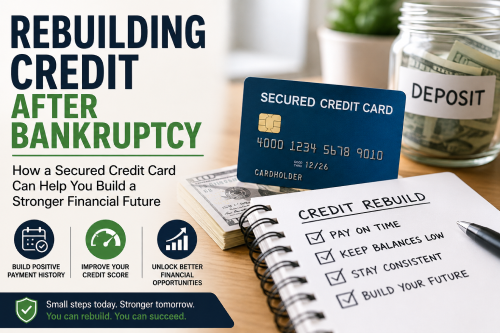

How a Secured Credit Card Can Help You Rebuild Credit After Bankruptcy
Bankruptcy can feel like a financial reset button. While it often provides much-needed relief from overwhelming debt, many people worry about what comes next. One of the biggest concerns is rebuilding credit.
The good news is that bankruptcy does not permanently destroy your financial future. Thousands of people successfully rebuild their credit every year, and one of the most effective tools available is a secured credit card.
If used responsibly, a secured credit card can help establish a positive payment history, improve your credit profile, and create opportunities for better financial products in the future.
Understanding Life After Bankruptcy
After a bankruptcy discharge, many consumers find themselves in an unusual situation. While they may no longer have significant debt obligations, their credit score has often suffered substantial damage.
Lenders may view a recent bankruptcy as a sign of increased risk. As a result, qualifying for traditional unsecured credit cards, vehicle loans, or mortgages may become more difficult.
However, rebuilding credit is not about proving perfection. It is about demonstrating responsible financial behavior over time.
This is where a secured credit card can play a valuable role.
What Is a Secured Credit Card?
A secured credit card functions similarly to a traditional credit card, but it requires a refundable security deposit.
For example:
Deposit $500
Receive a $500 credit limit
The deposit protects the lender while giving you access to a revolving credit account that reports to the major credit bureaus. The Amazon Secured Credit Card is known to assist Americans in rebuilding their credit.
As you use the card responsibly and make payments on time, your account activity may be reported to the credit reporting agencies, helping you build a stronger credit history.
Why Secured Credit Cards Work
Credit scores are heavily influenced by payment history and credit utilization.
A secured credit card helps address both.
Payment History
Payment history is one of the most important factors in most credit scoring models.
Every on-time payment helps demonstrate that you can manage credit responsibly.
Over time, consistent payments can begin to offset the negative impact of past financial difficulties.
Credit Utilization
Credit utilization measures how much of your available credit you are using.
For example:
Credit limit: $500
Balance: $50
Utilization: 10%
Lower utilization rates generally signal responsible credit management.
Many financial professionals recommend keeping utilization below 30%, and even lower if possible.
The Importance of Using the Card Correctly
A secured credit card is a tool. Like any tool, its effectiveness depends on how it is used.
Some best practices include:
Make Every Payment On Time
Late payments can damage your credit and undermine your rebuilding efforts.
Consider setting up:
Automatic payments
Calendar reminders
Banking alerts
Consistency is often more important than speed when rebuilding credit.
Keep Balances Low
Just because you have access to a credit limit does not mean you should use all of it.
Many successful credit rebuilders use their card for small recurring expenses such as:
Gas
Streaming subscriptions
Cell phone bills
They then pay the balance in full each month.
Avoid Applying for Too Much Credit
After bankruptcy, it can be tempting to apply for multiple credit products.
Each application may result in a credit inquiry, and too many applications in a short period can send the wrong signal to lenders.
Focus on building a solid foundation first.
How Long Does Credit Rebuilding Take?
Credit rebuilding is a marathon, not a sprint.
Some consumers begin seeing improvements within several months of responsible credit use.
More significant improvements often occur after:
12 months
24 months
36 months
The exact timeline depends on factors such as:
Previous credit history
Bankruptcy type
Current financial habits
Income stability
Existing debts
Patience and consistency are essential.
Additional Steps to Strengthen Your Credit Profile
A secured credit card should be part of a broader financial recovery strategy.
Create a Budget
A realistic budget helps prevent future financial problems.
Knowing where your money goes each month allows you to make informed decisions and avoid unnecessary debt.
Build an Emergency Fund
Unexpected expenses often contribute to financial hardship.
Even a modest emergency fund can help reduce reliance on credit when challenges arise.
Monitor Your Credit Reports
Review your credit reports regularly for accuracy.
Ensure that discharged debts are reported correctly and dispute any errors you discover.
Maintain Stable Financial Habits
Lenders often look beyond a credit score.
Stable employment, consistent income, and responsible money management can improve your overall financial profile.
Can a Secured Card Lead to Better Credit Products?
In many cases, yes.
Some secured card issuers like the Amazon Secured Credit Card offer upgrade pathways that may allow qualified customers to transition to an unsecured card after demonstrating responsible use.
As your credit improves, you may also become eligible for:
Traditional credit cards
Vehicle financing
Personal loans
Mortgage financing
Every positive step builds upon the previous one.
Bankruptcy Is Not the End
Many successful business owners, entrepreneurs, and professionals have experienced financial setbacks at some point in their lives.
Bankruptcy is not necessarily a reflection of personal failure. For many people, it is a legal tool designed to provide a fresh start.
The key is what happens afterward.
A secured credit card can provide a practical and accessible way to begin rebuilding your credit profile. By making payments on time, keeping balances low, and practicing sound financial habits, you can gradually restore your creditworthiness and move toward a stronger financial future.
The journey may take time, but every positive financial decision you make today can help create new opportunities tomorrow.