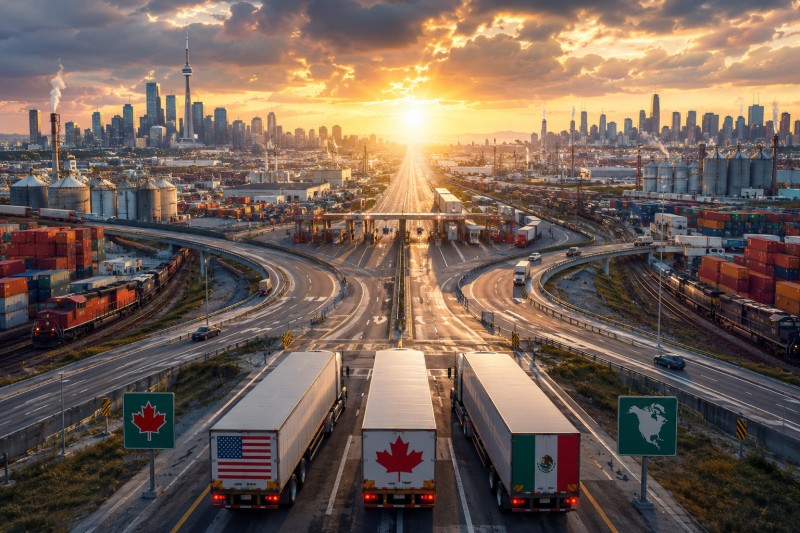
Canada's Position in a Changing North American Trade Landscape
Because this article focuses primarily on Canada's economic position, we'll leave Mexico's domestic situation aside and concentrate on the Canadian side of the USMCA debate.
A significant portion of Canada's private sector has historically depended on exporting goods and services to the United States. For decades, Canada's close geographic proximity, integrated supply chains, relatively lower operating costs, and a generally weaker Canadian dollar made it an attractive location for manufacturers and exporters serving the U.S. market.
In our view, that competitive advantage has gradually eroded over recent years.
Under former Prime Minister Justin Trudeau and now Prime Minister Mark Carney, Canadian businesses have faced additional taxation and expanding regulatory requirements. Critics frequently point to measures such as the federal industrial carbon pricing system, along with broader regulatory changes, as increasing the cost of doing business in Canada.
Supporters argue these policies promote environmental responsibility and long-term economic sustainability. Critics, however, contend they have reduced Canada's competitiveness at a time when attracting private investment has become increasingly important.
Canada has also experienced periods of weak economic growth, with some economists describing parts of that slowdown as a technical recession. The Carney government has defended its fiscal policies as necessary investments intended to support long-term economic growth, while opponents argue that higher government spending and persistent deficits simply shift today's financial burden onto future taxpayers.
Another important feature of Canada's economy is its network of Crown corporations—government-owned enterprises operating in sectors ranging from transportation to financial services. Some critics argue these organizations represent substantial long-term public liabilities that are not always reflected in public discussions of government finances.
Canada also maintains a supply management system governing industries such as dairy, poultry, and eggs. The system limits imports through quotas and tariffs while controlling domestic production. Supporters argue it provides stability for Canadian farmers, while critics contend it restricts competition and raises prices for consumers. The issue has frequently surfaced during trade negotiations between Canada and the United States, with President Donald Trump repeatedly identifying supply management as one of the areas where he believes additional concessions should be made.
Compared with Canada, Mexico has generally avoided some of these specific disputes and has remained engaged in discussions with Washington over the future of North American trade.
President Trump has also continued to make headlines by suggesting that Canada should become America's "51st state." While often viewed as political rhetoric, the comments reflect his broader view that the Canadian economy is deeply dependent on access to U.S. markets. If tariffs substantially increase the cost of exporting from Canada, some Canadian businesses could consider relocating portions of their operations—or even their headquarters—to the United States to remain competitive.
It is also worth noting that tariffs have historically received support from politicians across the political spectrum in the United States under different circumstances. Labor organizations have often favored tariffs when they believe they help protect domestic manufacturing jobs from foreign competition, while free-trade advocates generally argue that lower trade barriers encourage greater economic efficiency and consumer choice.
Prime Minister Mark Carney has responded by emphasizing Canada's intention to diversify its international trade relationships beyond the United States. Whether that strategy proves successful remains an open question. While expanding trade with Europe and Asia presents opportunities, many foreign markets also maintain their own tariffs, regulatory requirements, import quotas, and non-tariff trade barriers that can make market entry more difficult than exporting into the United States.
As negotiations over the future of the USMCA begin, businesses on both sides of the border will be watching closely. The decisions made during the coming years could reshape North American trade for decades to come.